Example ChatGPT Prompts for Speech-Language Pathologists
February 28, 2023
ChatGPT prompts can be an effective tool for Speech-Language Pathologists (SLPs) to plan therapy sessions, stay informed on new developments in their field, and develop exercises to improve patients’ communication abilities.
By customizing prompts, and then refining answers as needed by asking follow-up questions, SLPs can optimize their own professional development and provide better care for their students, clients and/or patients.
For those unfamiliar with ChatGPT, it is an AI language model that generates human-like text based on input prompts. To learn more about ChatGPT and the world of digital therapeutics, visit our article on Digital Therapeutics & AI in Speech Language Therapy. You can access ChatGPT directly at chatgpt.com.
5 ChatGPT Prompt Examples for SLPs
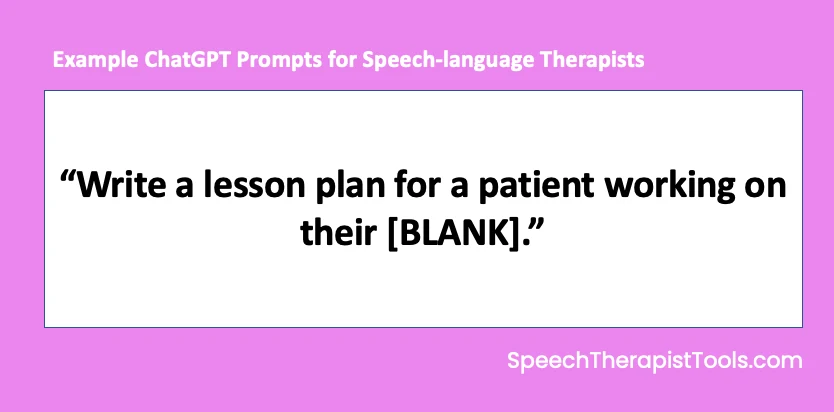
- “Write a lesson plan for a patient working on their [BLANK].”: Stuttering? Phonemic Awareness? Storytelling? Articulation? Minimal Pairs Therapy? The possibilities are endless. Include the age and/or grade-level of the client to get more targeted results. Ask follow-up questions so ChatGPT can fine-tune the lesson plan to your specifications.
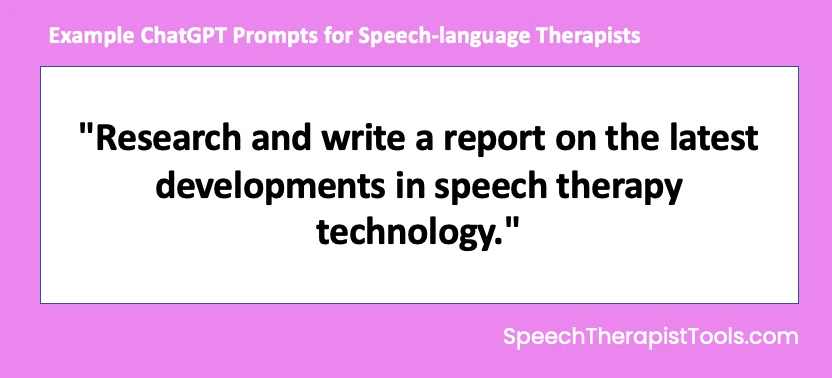
- “Research and write a report on the latest developments in speech therapy technology.”: Useful for keeping up-to-date on new advances in speech and language pathology and incorporating new technologies into your work. It can also surface great resources you may be unfamiliar with, like Speech Therapist Tools.
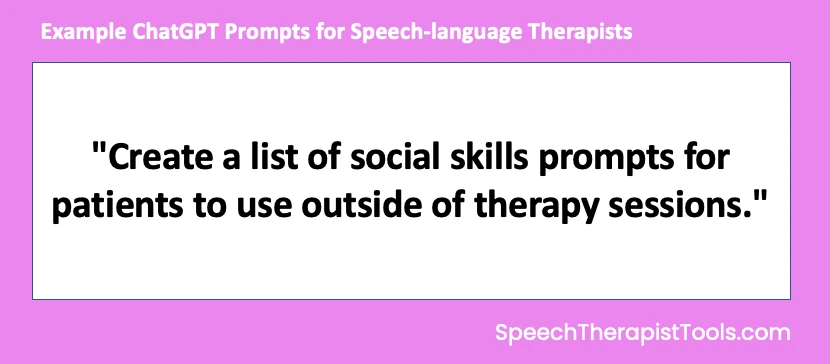
- “Create a list of social skills prompts for patients to use outside of therapy sessions.”: This request generates prompts to assist with pragmatic skills — including conversation starters, active listening prompts, conflict resolution, group interaction prompts, and nonverbal communication practice. Use follow-up requests to refine for specific age groups or skill levels.
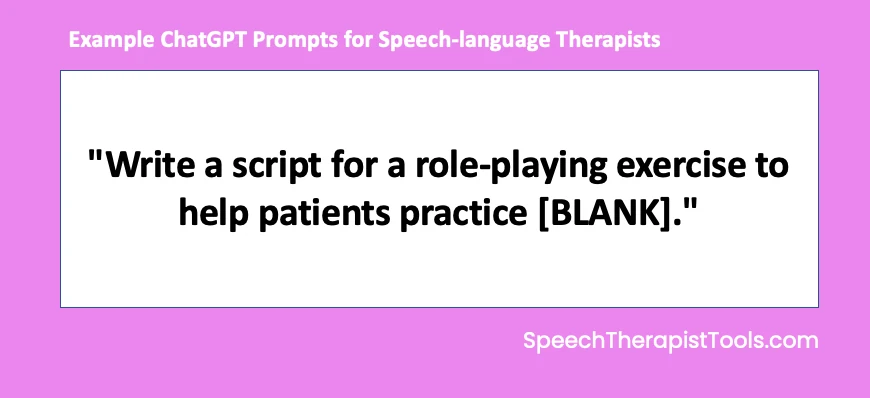
- “Write a script for a role-playing exercise to help patients practice [BLANK].”: Helps SLPs develop exercises for specific communication skills such as assertiveness, fluency, articulation, voice/resonance, AAC use, language comprehension, or problem solving.
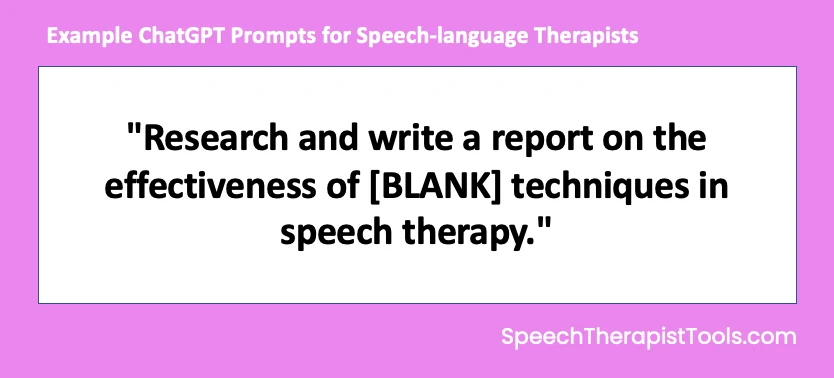
- “Research and write a report on the effectiveness of [BLANK] techniques in speech therapy.”: Useful for evaluating evidence-based practices across stuttering management, AAC strategies, narrative-based interventions, resonant voice therapy, and social communication interventions.
Pro Tip: Be as specific as possible in your prompts — include the patient’s age, diagnosis, therapy goals, and setting. The more context you provide, the more targeted and useful the response. Always review AI-generated content carefully before applying it to your practice.
We hope this post has given you a solid starting point for using ChatGPT (or other AI tools) to improve outcomes for your students, clients, and patients. Looking for an AI assistant built specifically for SLPs? Try Speechy™ — our own virtual Speech-Language Pathology assistant.
As a general rule, AI tools are only as effective as the prompts you provide. Aim to be specific, use follow-up questions to refine answers, and always verify AI-generated information before applying it to your practice.
Want more? Check out our comprehensive guide: 72 AI Prompts for Speech-Language Pathologists — covering articulation, language development, fluency, AAC, dysphagia, and more.